the body speaks, trust your instincts.
My work was born from a lifetime spent inside high-demand service environments where being emotionally available, accommodating, and constantly “on” was normalized.
For years, I worked in customer service-oriented roles where caring for the comfort and experience of others was expected at all times.
Over time, I began recognizing how many women disconnect from themselves in order to keep functioning.
For me, that disconnect often looked like over-functioning, emotional exhaustion, and popping the cork on a bottle or 2 of chardonnay to come down from the constant pressure of the day.
I first stepped onto a yoga mat in 2012 in Charleston, South Carolina. At the time, attending class felt like a quieter and more honest choice than going out drinking.
Even then, I knew alcohol was getting in the way of the life I really wanted to live — although it would take many more years before I fully understood what that meant for me.
For years after developing a yoga practice I continued living in both worlds — my routine was to go to yoga, work and home to a several glasses of wine.
It felt like I was living a double life.
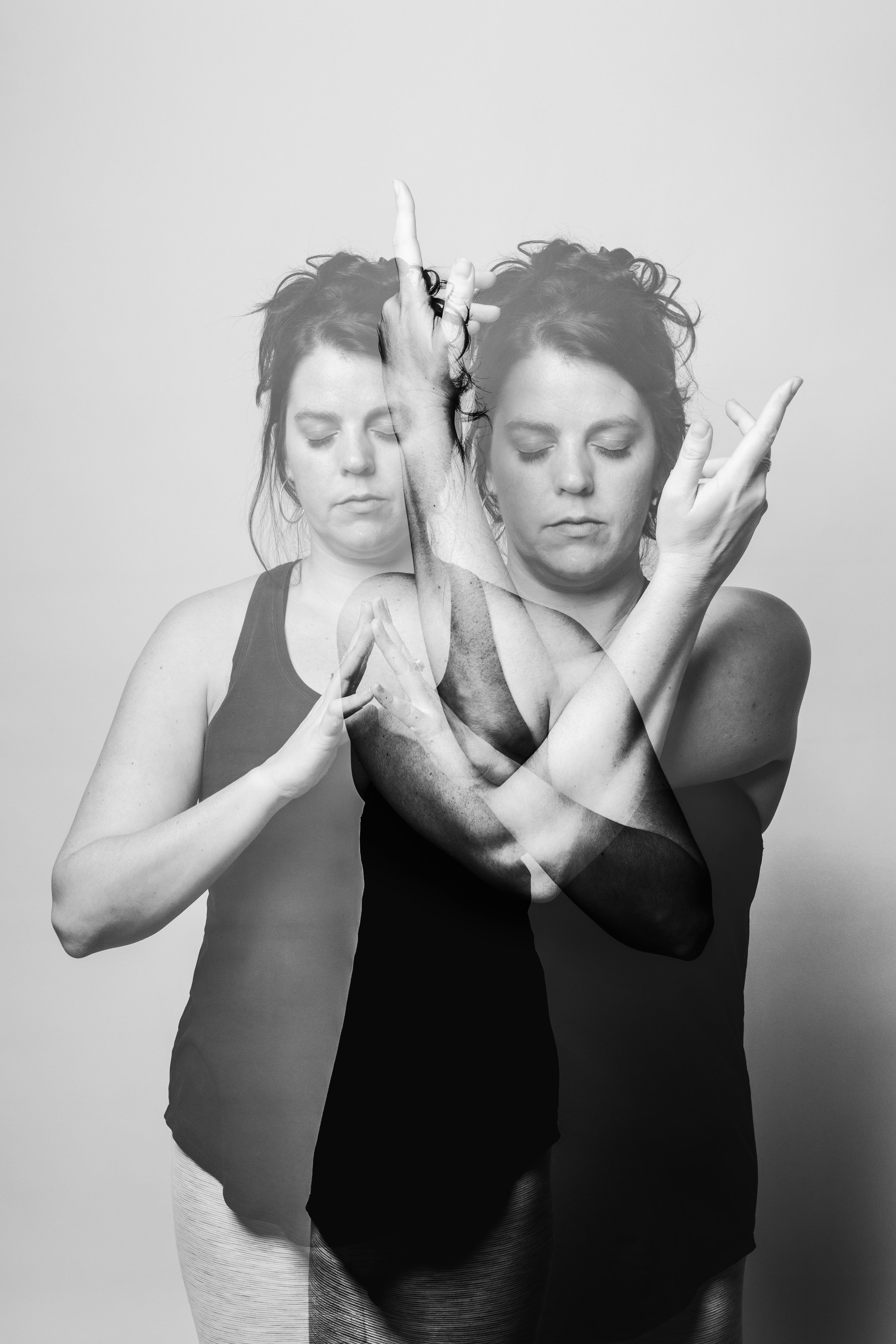
In 2016, I completed my yoga teacher training and started teaching and assisting classes right away. An experience that deeply shaped the way I understand movement, awareness, and embodiment today.
Assisting taught me how to observe movement beyond the physical postures — to notice breath, energy, emotional responses, and the ways the body communicates when someone is disconnected or fully present within themselves.
My body was often telling me the truth long before I was ready to listen.
I later opened a yoga studio, where I taught classes, led trainings, and created spaces centered around movement, awareness, and connection.
Throughout all of it, yoga remained the place I kept returning to — not as a way to escape myself, but as a way to return to myself, my body, and the parts of me I had spent years disconnecting from in order to survive.
In 2024, I chose sobriety. That decision brought a level of clarity, honesty, and self-trust that deeply changed the way I relate to myself, my body, and my work.
Over time, breath-guided movement became a way of developing trust in a body I had spent years overriding and disconnecting from —not through perfection or performing wellness, but through learning how to listen instead of abandon myself.
My work is rooted in the belief that intelligence begins in the body, and that reconnecting to ourselves often starts by learning how to feel, listen, and stay present within it again.
Today, through a variety of wellness experiences (group classes, workshops, retreats and private sessions) …
I create grounded and emotionally intelligent spaces for women to reconnect with themselves through movement, breath, awareness, and embodied experience —developing greater trust in both their bodies and themselves.
[Work with me]
the body speaks, cont..
Frequently Asked Questions
-
Absolutely.
For many people, stillness does not come first. Sometimes movement is what helps create enough grounding for the mind and body to begin settling.
My approach acknowledges that challenge, breath, and movement can all be supportive pathways into embodiment and awareness.
-
Over-functioning can look like constantly taking responsibility for everyone and everything around you while ignoring your own needs in the process.
It often shows up as difficulty resting, people-pleasing, overcommitting, emotional caretaking, perfectionism, or feeling responsible for keeping everything and everyone okay.
Many women have learned these patterns as a way to cope, succeed, or feel safe within demanding environments.
-
My teaching experiences are rooted in breath-guided vinyasa movement, intentional cueing, and embodied awareness.
Classes often blend grounded challenge with nervous system awareness — helping students get out of their heads and into their bodies while building steadiness, strength, and presence within the practice.
-
At times, yes.
I believe challenge can be an important part of embodiment when approached with awareness and intentionality. Women are encouraged to observe their responses within the practice while learning when to push, when to soften, and when enough is enough.
My approach helps women believe in their strength.
-
Flexibility is not the goal of the practice.
The work is centered around awareness, connection, breath, and learning how to listen to your body with more honesty and trust.
Getting bendy is just a bonus!
-
Private sessions offer a more individualized space to explore movement, breath, awareness, nervous system support, and embodied practice.
Sessions are tailored to each woman and designed to support a more connected and sustainable relationship with both the body and self.
Over time, the goal is to establish more trust in your body.
-
For many women, productivity, caretaking, and being needed become deeply connected to self-worth over time.
When the body and nervous system become accustomed to constant movement, responsibility, or emotional output, slowing down can feel unfamiliar, uncomfortable, or even unsafe.
This work is not about forcing rest. It is about developing greater awareness around those patterns while learning how to reconnect with yourself in a more sustainable and honest way.
-
You are not alone.
Many women spend years disconnected from themselves while navigating burnout, emotional over-functioning, stress, or survival mode. This work is about developing awareness and trust over time — not achieving perfection.
-
Most people do at some point.
My goal is to create grounded, approachable, and emotionally intelligent spaces where women can explore movement and awareness without needing to perform, prove, or be perfect.
In part, you are creating a space where it feels ok to be awkward.
-
That’s more common than many people realize.
For women who have spent years over-functioning, caregiving, or living in constant stress, disconnection from the body can become a way of coping or simply getting through the day.
This work is not about forcing connection. It’s about creating opportunities to notice yourself again over time with more honesty, patience, and awareness.
-
The body often holds tension, stress, emotions, and experiences that the mind has learned to move past or override.
Sometimes slowing down, breathing deeply, or moving with greater awareness creates space for emotions, thoughts, or sensations to surface. This is a normal part of reconnecting with the body and developing greater awareness of yourself.
-
No.
While my work is emotionally intelligent and grounded in embodiment and nervous system awareness, it is not therapy or a replacement for mental health treatment.
However, it is a wonderful to do in conjunction with therapy. I do it all the time!
-
Yes.
I offer movement, nervous system support, and wellness experiences for customer service-oriented and high emotional labor environments. These sessions are designed to support embodiment, stress awareness, burnout prevention, and sustainable self-connection within demanding work settings.